

USPS
Ground Advantage
2–5 days$7.40
$1.20 of that all-in figure is prepaid insurance, quoted inside the same number
all-in · the number the flat fare must beat
Updated
Flat rate charges for the box regardless of weight; weight-based charges for the scale reading and the distance. Flat rate wins on dense items travelling far and loses on light parcels and short zones — the decision is density and zone, not habit. Price both on the same parcel before defaulting.
Quote the same parcel twice, flat rate packaging and then your own box, across USPS, UPS and FedEx, and take the smaller all-in number.


 side by side
Card, Apple Pay, Google Pay, ACH, or crypto fund one prepaid balance, debited the exact all-in price of whichever model won.
Flat rate is an insurance product wearing a shipping label. The carrier looks at everything people stuff into a given container — the barbell plates and the birthday cards alike — and sets one fare that covers the average, plus the certainty premium. Buy the box and you have bought out two variables at once: the scale reading and the zone. Nothing you put inside, up to the ceiling, and nowhere you send it, within the domestic network, changes the price. That certainty is genuinely worth money to some operations — predictable checkout pricing, no scale at the packing bench, no zone chart taped to the wall.
But averages have a geometry: every parcel lighter or nearer than the average is subsidizing every parcel heavier or farther than it. The flat fare is a bet the carrier is happy to take on both sides, and your job is to be on the winning side of it — shipping dense things far on the flat fare, and everything else by the scale. Weight-based pricing is the opposite instrument: it resolves those same two variables per parcel, charging the scale reading against the zone distance, so it is cheap exactly where flat rate is expensive and expensive exactly where flat rate is cheap. Neither model is the deal; the match between model and parcel is the deal.
The test has two questions, and both must point the same way before flat rate wins. First, density: does the item fill the container with weight rather than air? A container mostly full of weight pushes the equivalent weight-based quote up toward and past the flat fare. A container mostly full of air — apparel, plush, packaging peanuts around something small — leaves the weight-based quote far below it. Second, zone: is the destination far? Weight-based quotes climb zone by zone; the flat fare stands still, so distance is what closes the gap that density opened. Dense and far: flat rate is usually the win. Light and near: the scale wins, and it is rarely close. The split cases — dense but near, light but far — are exactly where you stop reasoning and quote both.
The table below is the practiced-seller version of the test: where each USPS flat rate container tends to win and lose, stated as mechanism so it survives rate years. Treat it as a prior, not a verdict — your box, your zone map, and this year's charts settle every real case.
| Container | Where it wins | Where it loses |
|---|---|---|
| Flat rate envelope | Dense, bendable contents — documents, small electronics, folded textiles — travelling to mid and far zones. | Anything light enough that first-ounce parcel pricing undercuts the flat fare, which is most sub-pound parcels to nearby zones. |
| Small flat rate box | Genuinely dense small items to far zones: hardware, dumbbell plates, coin lots, ammunition-adjacent weights that fit the tiny footprint. | Almost everything light. The box is small enough that few items in it weigh enough for weight-based pricing to hurt. |
| Medium flat rate box | The classic case — several pounds of dense goods crossing most of the country, where zone-priced services climb past the flat fare. | Light or bulky-but-airy contents, and nearly any destination one or two zones away, where weight-based ground stays cheaper. |
| Large flat rate box | Heavy, compact loads to distant zones, where the same weight priced by scale and distance would cost dramatically more. | Contents that fill the space without weight. A big box of pillowy goods pays flat fare for density it does not have. |
Break-even reference — verified against USPS's published Priority Mail flat rate lineup and rate charts on 2026-08-15. The current domestic lineup is the flat rate envelope family plus small, medium, and large flat rate boxes, all flat within a 70 lb ceiling and all priced without a zone component. As a working band at current charts: the medium box starts beating zone-priced Priority Mail around the mid-single-digit pounds to distant zones, and loses to weight-based ground on almost any parcel travelling one or two zones. Rates reset at least annually and reshape every band, so re-derive before relying: weigh the parcel, note the destination zone, and quote both models on the same screen — the method survives every rate year even though the numbers do not. Re-check cadence: at the USPS annual rate change, by the named marketing owner recorded with this page.
Three territories belong to the scale permanently. The first is the light parcel, full stop: anything in the ounces-to-a-pound range prices on the bottom rungs of weight-based services, far below any flat fare calibrated for pounds — most e-commerce parcels live here, which is why most sellers should not default to flat rate. The second is the short lane: within one or two zones, weight-based prices barely rise from their floor, and the flat fare is spotting the carrier the cross-country distance you did not use. The third is the parcel that does not fit the container — literally, or economically because forcing it into the next container up means paying for capacity you cannot fill.
One caveat keeps weight-based quotes honest: on larger boxes, carriers may price your parcel on its dimensional weight — a volume-derived number — instead of the scale reading when the volume number is bigger. Flat rate containers are immune to that arithmetic, which occasionally rescues a bulky-but-light parcel a dimensional calculation would punish. The divisors, thresholds, and how to measure for them are owned by the package size and weight limits page, and the one-line version is: know whether your box is big enough for volume pricing to apply before trusting a scale-only comparison.
Everything above compresses into a sixty-second routine. Weigh the packed parcel — packed, not the item alone, because the comparison is decided at the margin where a mailer's ounces matter. Note the destination and let the quote resolve its zone. Then price it both ways: once with the flat rate container as the declared packaging, once in your own box against the weight-based services of USPS, UPS and FedEx, every service one all-in number with its delivery window. The cheaper number wins, and there is nothing else to the method — no chart to memorize, no rule of thumb to misremember after the next rate change. Which carrier's weight-based ground service tends to win, and how destination density and final-mile handoffs move that answer, is a separate comparison owned by the cheapest ground shipping services page.
The routine matters more than any single answer it produces, because a catalog is not one parcel. Sellers who ship the same product to scattered buyers will find the winner flipping order by order as the zone changes — the same box flat rate on a coast-to-coast Tuesday and weight-based across town on Wednesday. Locking either model in as a store-wide habit donates the difference to the carrier on every wrong-side order. Quoting both every time, from a wallet with no monthly fee on Free, costs seconds and captures the spread both ways.
Everything this page argues collapses into one loop you can run at the bench. The parcel gets weighed packed — mailer, filler, and invoice included, because the comparison is decided at exactly that margin. The destination resolves its own zone, so you never read a chart. Then the same parcel gets priced two ways: once with the flat rate container declared as the packaging, once in your own box against the weight-based services of USPS, UPS and FedEx. Whichever number is smaller is the answer, and it is allowed to be a different answer tomorrow.
two of the heavy ones — shipping to Portland, OR
Weigh it packed. A mailer's ounces and a sheet of bubble wrap are exactly the margin that decides which side of the break-even a parcel lands on, and they are the part sellers most often leave off the scale.
 Billy AI
Run it again on the next order rather than turning today's winner into a store-wide habit. The same box is often flat rate coast to coast on Tuesday and weight-based across town on Wednesday, and a standing default donates that difference to the carrier on every wrong-side parcel.
Shopify, Etsy, WooCommerce, TikTok Shop, Amazon, eBay, Squarespace, Wix, Walmart, Square, BigCommerce, Magento, and Temu sync orders into one To Ship queue; a pasted Instagram or Facebook DM gets there through Billy instead. None of that touches the decision this page is about. A synced order arrives with an address and a line item, not with a packaging choice, so the density-and-zone test runs identically on all of them — and saved box sizes make re-running it on your regular parcels a two-tap job.
 Shopify
 Etsy
Etsy WooCommerce
 TikTok Shop
 Amazon
 eBay
eBay Squarespace
 Wix
Wix WalmartShopify PlusSoon
 Square
 BigCommerce
 Magento
 ZapierSoon
 NetSuiteSoon
 EcwidSoon
 Temu
Temu SheinSoon
 ChannelAdvisorSoon
 SkuVaultSoon
 Zoho InventorySoon
 Patreon
This page's method is only worth teaching because running it costs nothing: every carrier on the lane, one all-in number per service, and the other packaging choice a re-quote away.
Card, Apple Pay, Google Pay, ACH, and crypto top up one balance. Whether the flat fare or the scale wins today's parcel, the same wallet pays the exact quoted number, and a voided label credits back to it after the carrier accepts the void.
Paste the order or drop a screenshot and Billy drafts the parcel with the address validated before money moves. Re-quoting the same draft in flat rate packaging takes seconds, so you confirm the winner instead of computing it.
BillyLIVEA flat fare compared against a sticker rate plus surprise fees is a rigged test. Every quote here is one final number, so the flat-vs-weight decision is two honest prices side by side — and what you see is what leaves the wallet.
Weight-based is not one price: USPS, UPS and FedEx each price the scale differently, and the flat fare must beat the best of them, not the first of them. Quoting them all is what makes the test conclusive.
UPS$12.48FedEx$13.22DHL$14.10USPS$11.79The REST API quotes the same parcel under either declared packaging, so a script can price both models and buy the cheaper one on every order without a human reading a chart. Unlimited calls, signed webhooks, every plan.
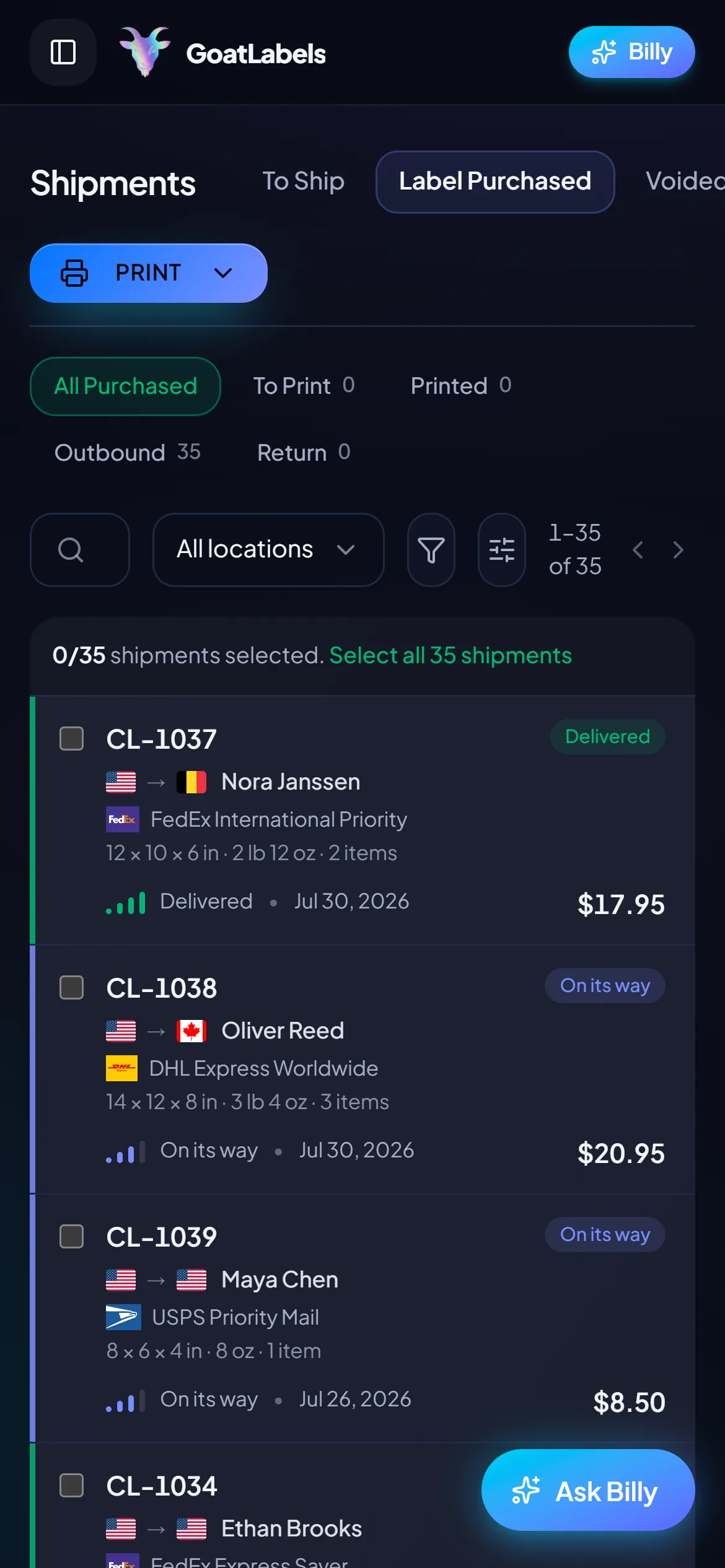
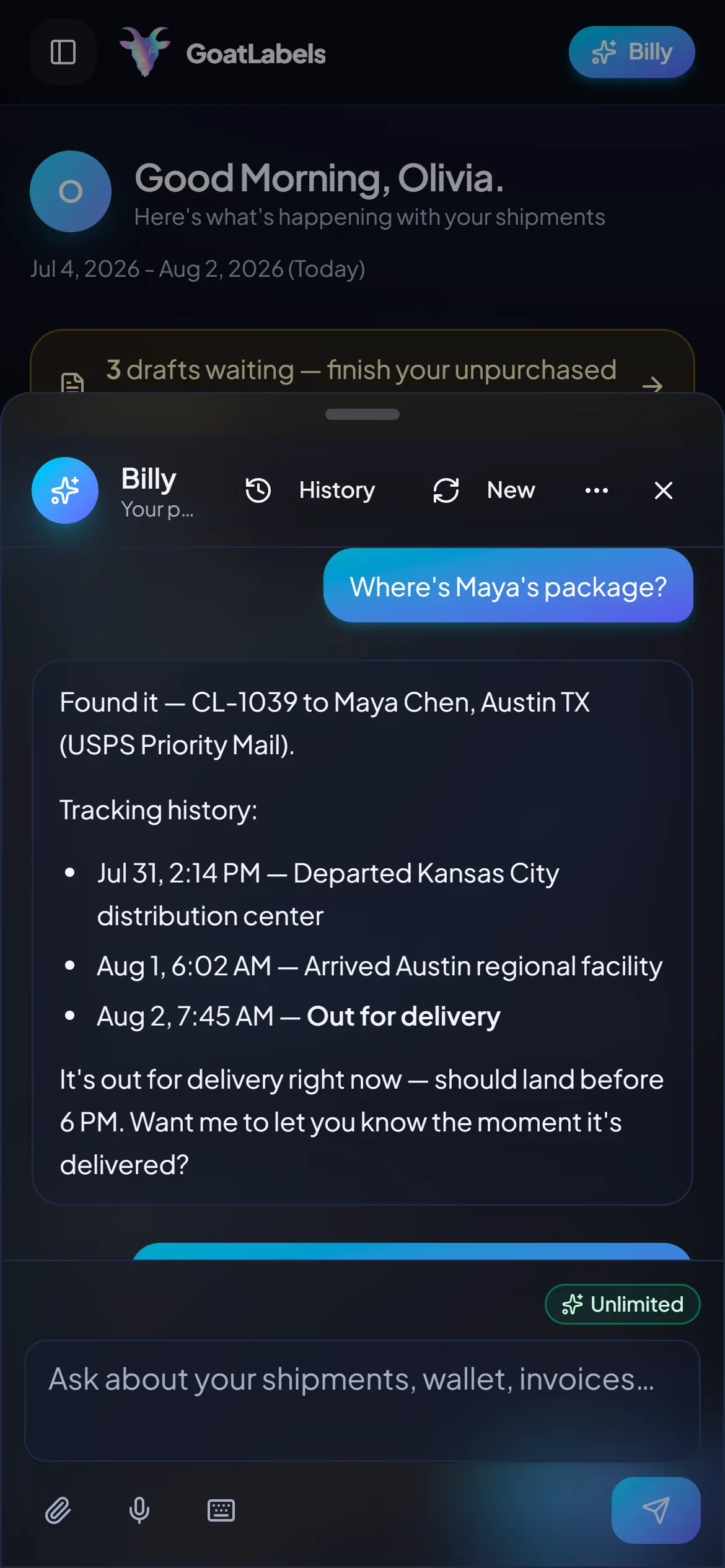
Both models quoted
Portland, OR · smaller number selected
A test you only run at a desk is a test you stop running by the fortieth order, and a habit is what this page exists to prevent. The scale is at the packing bench, so the comparison has to be there too: weigh, quote both ways, buy, print — without the laptop ever entering it.
Packing is a two-handed job, and the moment the comparison needs a free hand is the moment it stops happening. Ask out loud: Billy finds the shipment, quotes USPS, UPS and FedEx on the box you just weighed, and reads the all-in prices back so you can hold them against the flat fare without opening anything. Included on every plan. This is the real product, not a render.
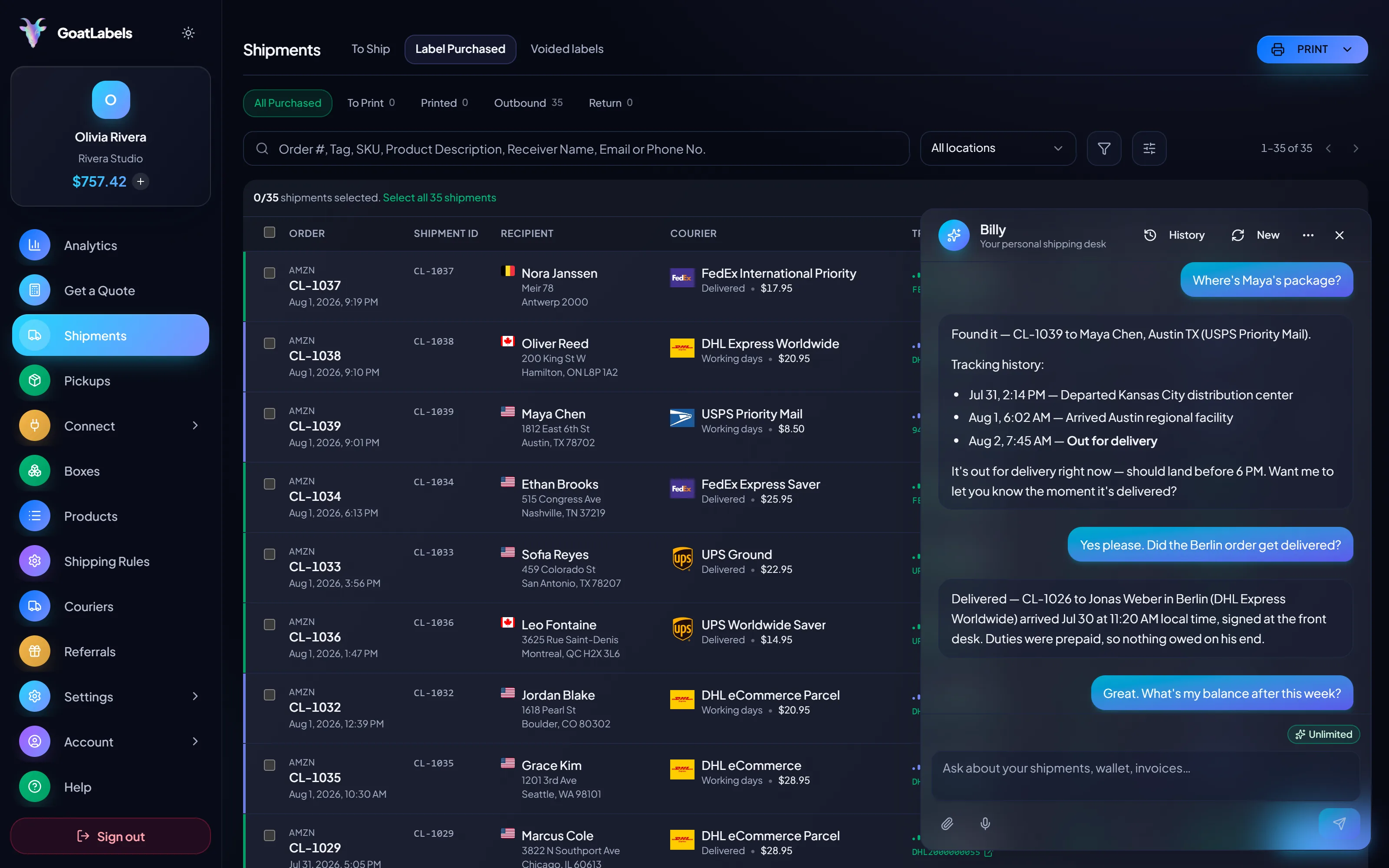
Listening
"What are the quotes on the Portland box?"
Out for delivery
Portland, OR · bought on the smaller number
Speaks plain English · remembers your saved box sizes, so a repeat parcel shape is recognised · included on every plan, at the bench or on the desktop.
Weight-based pricing is not one price, which is the part most flat-versus-weight arguments skip: each carrier prices the scale reading against the zone differently, so the flat fare has to beat the best of them rather than the first one you looked at. Here is that half of the comparison on a single packed parcel — one all-in number each, ready to hold against the flat fare. Figures are the site's standard illustrative parcel, not a rate quote.
Ground Advantage
2–5 days$7.40
$1.20 of that all-in figure is prepaid insurance, quoted inside the same number
all-in · the number the flat fare must beat
Ground
3–4 days$10.80
$1.20 of that all-in figure is prepaid insurance, quoted inside the same number
all-in · the number the flat fare must beat
Home Delivery
2–4 days$11.40
$1.20 of that all-in figure is prepaid insurance, quoted inside the same number
all-in · the number the flat fare must beat
The routine on this page is short but it is per-parcel, and per-parcel work is what scripts are for. Quote the same shipment under your own packaging and again with the flat rate container declared, compare the two all-in totals, and buy the smaller — over REST and JSON with one Bearer header, and with calls nobody counts.
POST /api/v1/shipments
Authorization: Bearer sk_live_…
Idempotency-Key: ord_8421

{
  "to": { "name": "Joyce", "city": "Berlin", "country": "DE" },
  "parcel": { "weight": 2.6, "weight_unit": "lb" },
  "service": "fedex_intl_priority"
}
A comparison you have to pay for is a comparison you ration, and a rationed comparison becomes a habit — which is the exact failure this page argues against. Quotes are free and unmetered, there is no monthly fee, and nothing about pricing a parcel twice touches a plan. Free covers 50 shipments a month; Pro is a flat plan for volume, and it changes nothing about what you may quote.
 — draft a parcel without opening the dashboard
Rate by plan
illustrativepay for labels, not for seats
$0 / forever
Quote every parcel both ways, every time, and pay only for the labels you actually buy.
Billy turns a pasted order or a screenshot into a validated draft, which is the input both quotes share. Running it on every parcel costs nothing on Free; Pro simply adds Billy on Telegram.
Telegram, ProGET /api/v1/shipments
200 OK · plan: free
Unlimited calls on Free — still unlimited on Pro, so a script can price both models per order.
Put a real parcel through and compare the side-by-side rate against what that label costs you on
ShippoPirate ShipShipStationWeight-based prices are quoted live from USPS, UPS, FedEx, and DHL as one all-in number, and that exact amount leaves your prepaid balance. Flat rate fares and their weight ceilings are the carrier's and reset at least annually — take the current figures from USPS and put them next to a live quote, exactly as the dated block above says. Full pricing details
Nobody loses money on the obvious cases. The loss lives in the parcels that sit near the break-even and get shipped on autopilot — and these are the four shapes where that happens most.
 Hardware, books, coin lots, tools
The classic split case. Density argues for the flat fare and the short zone argues against it, so reasoning stops being reliable and the two quotes have to be read side by side. This is the parcel a flat-rate habit overcharges most quietly.
 Apparel, plush, anything with filler
A container full of volume rather than weight pays a flat fare calibrated for pounds it does not have. Weight-based nearly always wins here — and on the larger boxes it is worth knowing whether volume pricing applies before trusting a scale-only comparison, which the package size and weight limits page owns.
Fit is the entry condition
Density and zone are what decide the economics

 A number promised before the box is packed

 The same box, a different winner each day
1
box shape, and a winner that flips with the zone — which is why the routine beats any store-wide rule
Related reading: package size and weight limits,the cheapest ground shipping services, andwhen paying for faster shipping pays.
A video took off and I had 80 TikTok Shop orders by morning. I printed every label from my phone on the bus to the post office.
Early customer · TikTok
TikTok Shop seller
TikTok ShopI run my Etsy shop from the kitchen. The AI reads the order, picks the carrier, the label prints. That's the whole workflow now.
Early customer · Etsy
Etsy maker
EtsyThe API is what every shipping API pretends to be. Idempotency that actually works.
Sasha R.
Staff engineer, marketplace
Weigh your next parcel, quote it flat rate and weight-based across USPS, UPS and FedEx, and let density and zone give you the answer this page promised.
Sign up in seconds. No card required. No monthly fee on Free, up to 50 shipments a month.
Updated